
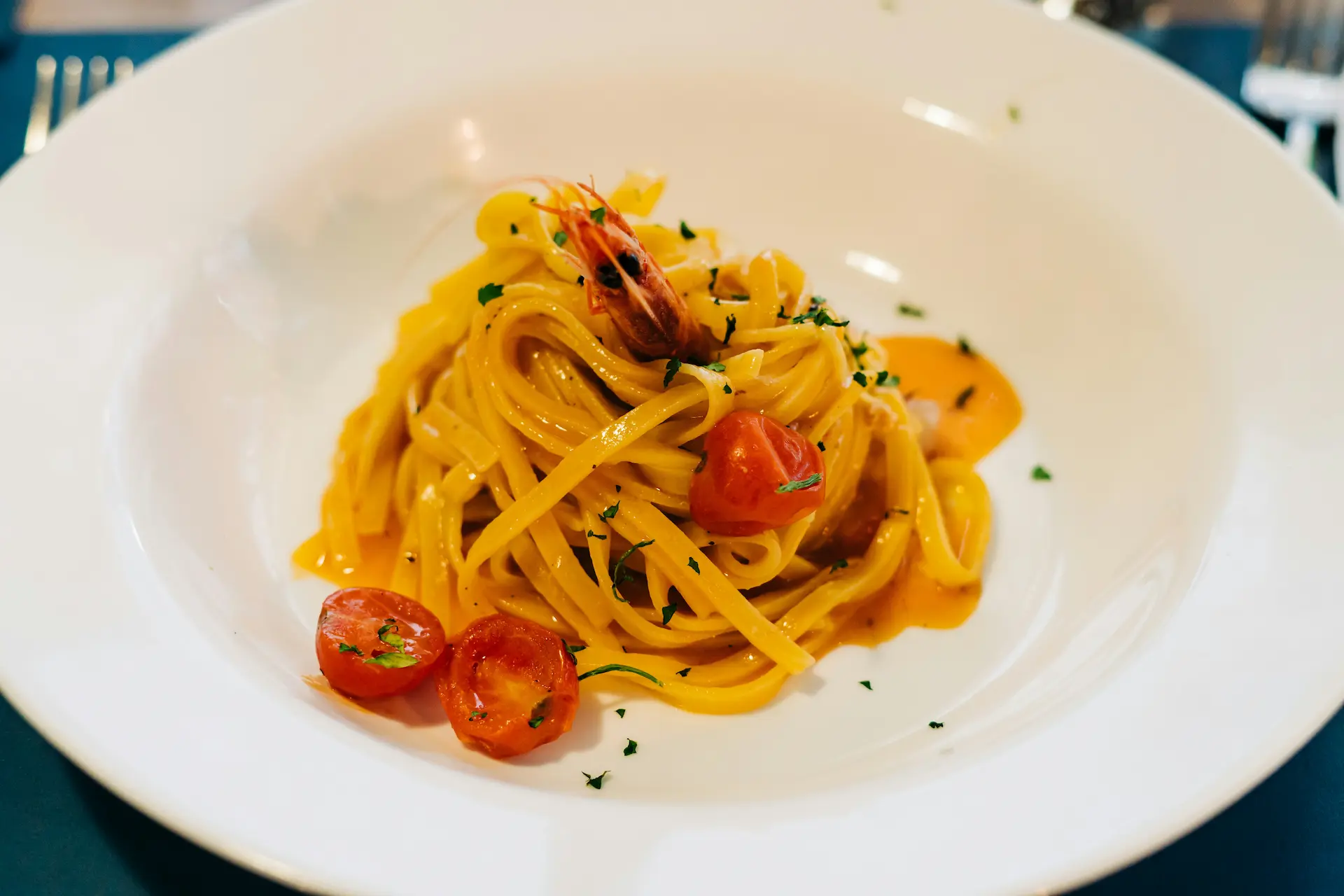
The best pasta in Rome nearly broke me. I say that with complete sincerity and zero regret. I ate enough carbonara and cacio e pepe in a week in Rome to last a reasonable person several years. I ate it for lunch. I ate it for dinner. On one memorable occasion I ate it twice in the same day because the first bowl was so good I wanted to compare it to somewhere else. My hotel was on a quiet street just outside the tourist chaos and every evening I’d wander out looking for somewhere with a chalkboard menu, no photographs on the walls, and a carafe of house red that cost less than a coffee back home. Rome delivered every single time.
Here is what I learned: the best pasta in Rome is almost never where you expect to find it. It’s rarely near the Colosseum or the Trevi Fountain. It’s in Testaccio, in Trastevere, in the historic center streets that tourists walk past on the way to somewhere more famous. It’s in a room where the waiter has been serving the same table for twenty years and doesn’t need to ask what you want.
For the full Rome eating experience beyond pasta, our Rome food guide covers every category worth knowing about.
Ready to book your Rome trip?
The Four Roman Pastas You Need to Know
Before the list, worth understanding what you’re actually ordering. Rome has four classic pasta dishes and they are all variations on the same humble ingredients: guanciale (cured pork cheek), pecorino romano, black pepper, eggs, and tomatoes. Understanding how they’re related makes ordering easier and eating more satisfying.
Gricia is the mother sauce. Guanciale, pecorino, black pepper, pasta water. That’s it. No tomato, no egg. The ancestors of the other three dishes all start here. Often overlooked on menus because it doesn’t have the name recognition of carbonara, which makes it the one serious pasta eaters order first to test a kitchen.
Carbonara adds egg yolks to the gricia base, creating the creamy, golden sauce that has made Rome’s pasta famous worldwide. The technique is everything: the eggs must temper gently from the heat of the pasta, never scramble. No cream. No peas. No bacon. Guanciale only. Anyone telling you otherwise is wrong.
Amatriciana takes the guanciale and adds tomato, removing the egg. Named after the town of Amatrice in the hills outside Rome. Traditionally served with bucatini, the thick hollow spaghetti that catches the sauce inside. The best version in Rome is a precise balance of salty guanciale, acidic tomato, and sharp pecorino. When it’s right, it’s one of the great pasta dishes in Italian cooking.
Cacio e pepe removes the meat entirely. Just pecorino romano, black pepper, and starchy pasta water, emulsified into a silky sauce that coats every strand. Three ingredients. Endless ways to get it wrong. The pasta water temperature, the ratio of cheese to pepper, the speed of the toss. A great cacio e pepe is harder to make than it looks, which is why the bad versions in Rome are common and the good ones are worth a special trip.
If you want to learn how to make any of these yourself, our best cooking classes in rome guide covers the top pasta-making experiences in the city.
Where to Eat Carbonara in Rome
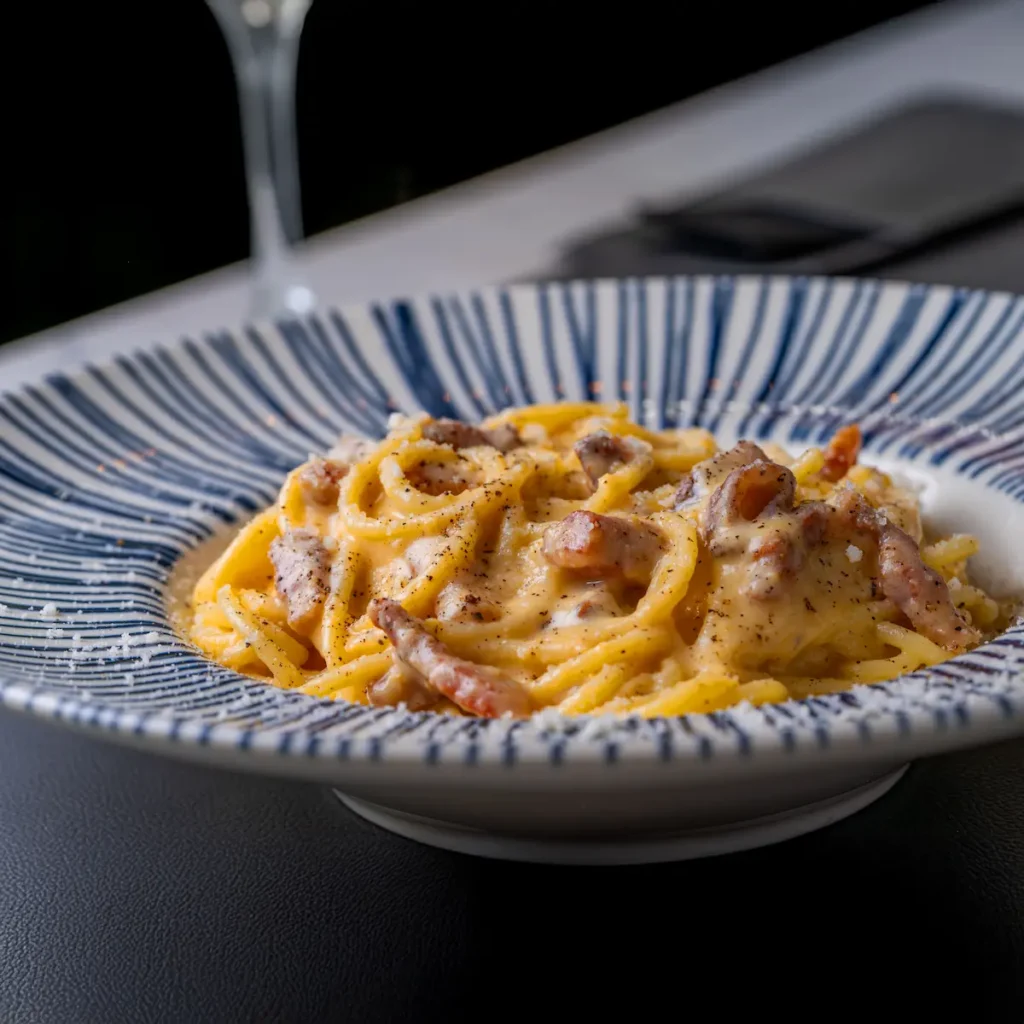
Carbonara is the dish most people come to Rome for and the one most likely to disappoint if you eat it in the wrong place. The tourist trap version, made with cream and bacon and overcooked pasta, exists everywhere near the major sights. The real version is worth finding.
When the carbonara is done and you need something cold and sweet, our guide to the best gelato in Rome has the best gelaterie by neighborhood. And you want to see the city from above, our best rooftop restaurants in Rome covers every option from Michelin-starred Colosseum views to casual aperitivo terraces.
Roscioli — The Benchmark
Roscioli near Campo de’ Fiori is frequently cited as serving the best carbonara in Rome and the argument is hard to refute. The carbonara here uses spaghettoni (thick spaghetti) rather than rigatoni, with an exceptionally silky sauce and guanciale that’s crisped to the edge of caramelized. The room is a deli, a wine bar, and a restaurant simultaneously and the quality extends to everything on the menu. The carbonara alone justifies the reservation.
Address: Via dei Giubbonari 21, Historic Center
Price range: €40-65 per person
Best for: The best carbonara in the historic center, the full Roscioli experience, serious wine
Book: salumeriaroscioli.com
Luciano Cucina Italiana — The King of Carbonara
Luciano near Campo de’ Fiori has earned the informal title of Rome’s “King of Carbonara” and a meal here confirms why. The carbonara is served with spaghettoni and arrives a vibrant golden yellow, the egg yolks cooked to exactly the right temperature. The guanciale is the best quality in the city. The technique is flawless. Many regulars consider it superior even to Roscioli for this specific dish. Book ahead, this is not a walk-in situation.
Address: Via del Biscione 76, Historic Center
Price range: €35-55 per person
Best for: The best carbonara in Rome, full stop
Book: lucianocucinaitaliana.it
If you want a local guide to take you straight to the city’s best pasta spots rather than hunting them down yourself, our Rome food tours guide covers the top options in Trastevere and Testaccio.
Da Enzo al 29 — The Trastevere Standard
Already covered in our best restaurants in rome guide, Da Enzo al 29 belongs on the carbonara list specifically. The rigatoni carbonara here is one of the most consistently excellent versions in Trastevere, made the traditional way with guanciale, pecorino, and egg, in a room that has been doing this since the late 1930s. The tiramisu with Nutella to finish is non-negotiable.
Address: Via dei Vascellari 29, Trastevere
Price range: €30-45 per person
Best for: Trastevere carbonara, the full classic trattoria experience
Book: daenzoal29.com
Flavio al Velavevodetto — Testaccio’s Best
Flavio al Velavevodetto in Testaccio has won formal recognition as one of the best carbonara restaurants in Rome and the rigatoni carbonara here, with crunchy guanciale and a deeply savoury sauce of pecorino, parmigiano, and egg, is the one to come for. The setting, carved into Monte Testaccio, an ancient hill of broken amphorae, adds a layer of theatre that most restaurants can’t replicate.
Address: Via di Monte Testaccio 97, Testaccio
Price range: €30-50 per person
Best for: Award-winning carbonara, the Testaccio atmosphere, cucina povera at its best
Book: flavioalvelavevodetto.it
Where to Eat Cacio e Pepe in Rome
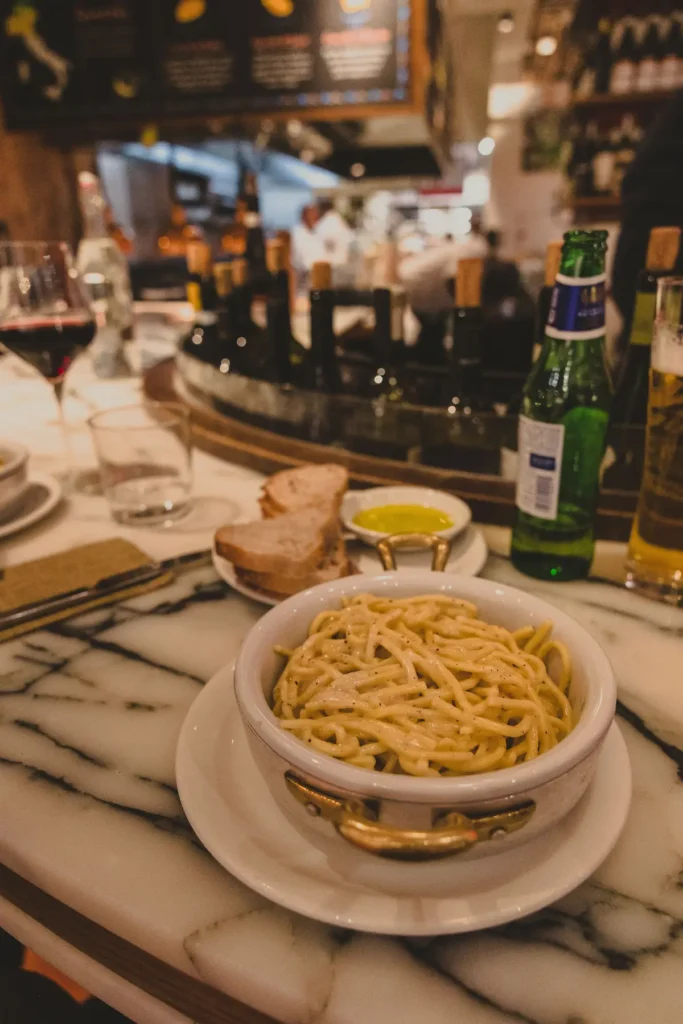
Cacio e pepe is the most technically demanding of the four Roman pastas and the one where the gap between good and great is widest. A bad cacio e pepe is clumpy, greasy, and aggressively salty. A great one is silky, perfectly balanced, and disappears faster than you planned.
Roma Sparita — The Bourdain Version
Roma Sparita on Piazza di Santa Cecilia in Trastevere is where Anthony Bourdain ate the most famous cacio e pepe in Rome, served in a crispy parmesan bowl that has become the defining image of the dish. The bowl itself is theater but the pasta inside is genuinely exceptional. Bourdain rhapsodized about it in 2010 and the restaurant has been famous ever since. The setting, outdoor tables on a quiet Trastevere piazza, is also one of the most beautiful places to eat in the city.
Address: Piazza di Santa Cecilia 24, Trastevere
Price range: €35-55 per person
Best for: The Bourdain cacio e pepe experience, the parmesan bowl, Trastevere piazza dining
Book: romasparita.eu
Grappolo d’Oro — The Local’s Pick
Grappolo d’Oro near Campo de’ Fiori is what a Roman local recommends when you ask where to eat cacio e pepe without the tourist markup or the famous restaurant wait. A slow food restaurant using quality ingredients for excellent Roman classics. The cacio e pepe is creamy, balanced, and properly peppery. The carbonara and amatriciana are equally reliable. One of those places where everything on the menu is good, which in Rome is rarer than it should be.
Address: Piazza della Cancelleria 80, Historic Center
Price range: €25-45 per person
Best for: Local cacio e pepe, reliable Roman classics, Campo de’ Fiori location
Book: grappolodoro.it
Zi Umberto — Trastevere’s Quiet Best
Zi Umberto on Piazza di San Giovanni della Malva is one of Trastevere’s classic trattorias and one of the less obvious cacio e pepe destinations in the neighborhood. The version here is slightly creamier and less sharp than the standard, and the kitchen does a unique variant with casarecce pasta, pecorino, and cicoria (bitter greens) that is genuinely one of the more interesting things on any Roman pasta menu. The kind of place that makes you feel like you found something most visitors walk straight past.
Address: Piazza di S. Giovanni della Malva 14, Trastevere
Price range: €25-40 per person
Best for: A quieter Trastevere cacio e pepe, the cicoria variant, local atmosphere
Where to Eat Amatriciana in Rome
Armando al Pantheon
Armando al Pantheon has been open since 1961 and is one of the hardest reservations to get in Rome for good reason. The amatriciana here is considered the standard against which other versions get measured: rigatoni, a deeply savoury tomato sauce, properly crisped guanciale in every mouthful. The carbonara is equally excellent and the gricia is one of the best in the city. The location, steps from the Pantheon, means you can combine the greatest pasta in rome with one of the greatest buildings in human history on the same afternoon.
Address: Salita de’ Crescenzi 31, Historic Center
Price range: €35-60 per person
Best for: The best amatriciana in Rome, the Pantheon location, booking essential
Book: armandoalpantheon.it
Da Bucatino — Testaccio for Serious Portions
Da Bucatino in Testaccio serves the most abundant portions of pasta in Rome, which is saying something. The bucatini all’amatriciana here is served in a bowl that makes you immediately question whether you should have skipped the starter. The restaurant feels more like an Italian grandmother’s living room than a proper restaurant and that’s precisely the point. If you want atmosphere and portion size in equal measure, Da Bucatino is the one.
Address: Via Luca della Robbia 84, Testaccio
Price range: €20-35 per person
Best for: Generous portions, authentic Testaccio amatriciana, local atmosphere
Where to Eat Gricia in Rome
Gricia is the pasta Rome forgets to tell tourists about, which is exactly why it’s worth ordering. The mother of carbonara, amatriciana, and cacio e pepe, gricia is the purest expression of the guanciale and pecorino combination without the tomato or the egg. It’s also the best test of a kitchen’s technique because there’s nowhere to hide.
Cesare al Casaletto — Worth the Trip
Cesare al Casaletto is at the end of a tramline in Monteverde and worth every minute of the journey. The gricia here is spectacular according to every serious Rome food person who has eaten there, perfectly creamy, peppery, and rich with the deep flavour of properly rendered guanciale. The Thursday gnocchi is also a Rome institution. One of the best restaurants in the city regardless of category.
Address: Via del Casaletto 45, Monteverde
Price range: €30-50 per person
Best for: The best gricia in Rome, the full Cesare experience, serious food pilgrimage
Book: trattoriadacesare.it
Perilli a Testaccio — Since 1911
Perilli is one of the oldest restaurants in Testaccio, open since 1911 with bow-tied waiters who have been serving the same tables for decades. The gricia here is one of the neighborhood’s best, the pasta cooked properly al dente, the guanciale crisped rather than soft, the pecorino sharp and generous. The room looks like nothing has changed since the war and that’s completely intentional.
Address: Via Marmorata 39, Testaccio
Price range: €30-50 per person
Best for: Historic Testaccio atmosphere, excellent gricia, the full old-Rome experience
Book: perilliroma.it
Beyond the Four Classics
The four Roman pastas are the reason most people come to Rome for pasta but the city’s repertoire extends further than carbonara and cacio e pepe.
Rigatoni con la pajata is the dish that separates serious Roman food people from everyone else. Made with the small intestines of milk-fed veal, cooked in tomato sauce and tossed with rigatoni. It sounds extreme. It tastes extraordinary. Found at Flavio al Velavevodetto and at Testaccio trattorias that still cook the full Roman menu.
Pasta e ceci (pasta with chickpeas) is one of the great Roman soup-pastas, humble and deeply satisfying. Thursday in Rome is traditionally for gnocchi, Friday for fish, but pasta e ceci is available year-round and the version at Armando al Pantheon is the benchmark.
Cacio e pepe variations worth seeking out: Roma Sparita’s parmesan bowl version is the famous one, but Zi Umberto’s casarecce with cicoria and pecorino is the most interesting variation on the dish currently being served anywhere in Rome.
Spaghetti alle vongole is technically not Roman but it’s on every good menu in the city and when the clams are fresh from the coast it’s one of the best pasta dishes in Italy. Da Dante near Trastevere does an excellent version.
Find Pasta in Rome by Neighborhood
Find the Best Pasta in Rome by Neighborhood
Select a neighborhood to see our picks.
Select a neighborhood above to see our pasta picks.
What to Know Before You Order Pasta in Rome
No cream in carbonara. This applies everywhere in Italy but Rome takes it personally. If a restaurant adds cream to carbonara it is either lying about what it is or it doesn’t know what it’s doing. Walk away.
No parmesan, only pecorino. The classic Roman pastas use pecorino romano, a sharper, saltier sheep’s milk cheese. Parmesan is Emilian. Some places mix a little parmigiano into carbonara for balance and that’s acceptable, but pure pecorino is the tradition.
Al dente is not negotiable. Roman pasta is cooked properly and served immediately. If your pasta is soft, something went wrong. The best Roman restaurants time everything so the pasta goes from pot to plate in under a minute.
Order the house wine by the carafe. I had a carafe of house red with every pasta meal in Rome and never once regretted it. A half litre runs €4-6 at most trattorias. The local wines from the Castelli Romani hills outside Rome are made to be drunk with this food.
Lunch is the smarter play. The menu del giorno at most trattorias is €12-18 for two or three courses. The same plates at dinner cost considerably more. Romans eat their main meal at midday. You should too.
The menu length tells you something. A trattoria with a short menu (four or five pasta options, all Roman classics) is usually more serious about what it’s doing than one with twenty options. The four classic Roman pastas are all the trattoria needs. If it can’t do those four well, the other sixteen won’t save it.
Planning Your Trip to Rome?
Find flights, book your hotel, and explore everything Rome has to eat.
Best Pasta in Rome FAQ
What is the best pasta in Rome?
The best pasta in rome depends on the dish. For carbonara, Luciano Cucina Italiana near Campo de’ Fiori and Roscioli are the two most consistently cited benchmarks. For cacio e pepe, Roma Sparita in Trastevere is the famous version and Grappolo d’Oro is the local’s pick. For amatriciana, Armando al Pantheon is the standard. For gricia, Cesare al Casaletto in Monteverde is worth the journey.
What pasta should I order in Rome?
Order at least one of the four classic Roman pastas: carbonara, cacio e pepe, amatriciana, or gricia. All four are variations on the same humble ingredients and all four are better in Rome than anywhere else on earth. The carbonara at any good Roman trattoria will ruin carbonara everywhere else for you permanently.
What is the difference between carbonara and cacio e pepe?
Carbonara uses egg yolks and guanciale alongside pecorino and black pepper, producing a rich, golden, creamy sauce. Cacio e pepe uses only pecorino and black pepper, emulsified with starchy pasta water into a silky coating. No meat, no egg. Both are Roman classics and both are made without cream.
Where should I eat pasta in Rome near the Colosseum?
Most restaurants immediately adjacent to the Colosseum are tourist traps. Walk fifteen minutes toward Testaccio for Flavio al Velavevodetto, Da Bucatino, or Perilli a Testaccio, all of which serve exceptional pasta at honest prices to a mostly local crowd.
What is gricia pasta?
Gricia is often called the mother of Roman pasta. Made with guanciale, pecorino romano, black pepper, and pasta water, it predates both carbonara (which adds egg) and amatriciana (which adds tomato). It’s less well-known than the other three Roman classics, which makes it the first thing serious pasta eaters order when testing a Roman kitchen.
Is pasta in Rome expensive?
Not at the right places. A plate of pasta at a good Testaccio or Trastevere trattoria runs €12-18. The menu del giorno at most trattorias gets you two or three courses for €15-22 at lunch. The tourist trap restaurants near major monuments charge €20-25 for pasta that isn’t worth €10.